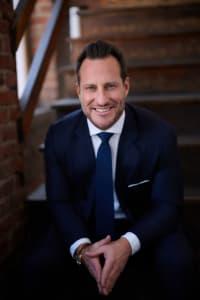
Chris Gober
Top rated Legislative & Governmental Affairs attorney in Austin, Texas
Practice Areas:
Legislative & Governmental Affairs,
Constitutional Law,
White Collar Crimes
Education Qualification:
Harvard Law School
Practice Areas:
Legislative & governmental affairs,
Constitutional law,
White collar crimes
PO Box 341016Austin, Texas, 78738
First Admitted: 2005, Texas
Professional Webpage: https://gobergroup.com/bios/gober/
Verdicts/Settlements (Case Results):
- Federal Election Commission v. Cruz, 596 U.S. 289 (2022), 2022
- Ted Cruz v. Federal Election Commission, 542 F.Supp. 3d 1 (D.D.C. 2021) , 2021
- — Mohamed vs. The Blaze, Inc. et al., No. DC-16-12579 (Dallas County District Court). In a decisive victory for free speech and freedom of the press, a legal team led by Chris Gober and Ross Fischer of The Gober Group and Kurt Schlichter of Schlichter & Shonack won a dismissal and fee award in a high-profile defamation suit filed by the father of a Muslim teenager who was arrested and suspended in 2015 for bringing a clock, which many have said looked like a bomb, to school. The incident put the Irving, Texas student, who came to be known in the media as “Clock Boy,” at the center of a national debate about terrorism and racial profiling and set off a firestorm of social media support for the teen who received invitations to visit Facebook, MIT, NASA, and even then-President Obama at the White House. In the fall of 2015, lawyers for Mohamed Mohamed, the student’s father, sent two demand letters—one to the City of Irving, and another to the Irving Independent School District—asking for a total of $15 million for alleged civil rights violations related to the arrest. The incident was widely discussed in the press, and well-known political commentator Ben Shapiro discussed the controversy with Megyn Kelly during a segment on The Kelly File. Nearly a year later, the father filed a defamation lawsuit against various media defendants who reported on and commented on the controversy, including Shapiro. Representing Mr. Shapiro, The Gober Group and Schlichter & Schonack moved to dismiss the suit using the Texas Citizens Participation Act, widely known as the “anti-SLAPP” statute, a Texas law that protects Texans from retaliatory lawsuits that aim to punish them for exercising their First Amendment rights. During a district court hearing on January 30, 2017, Gober established that Shapiro’s statements were covered by the anti-SLAPP statute and successfully argued that the claims should be dismissed because the statements were not defamatory per se, and were opinion or fair, true, and impartial statements involving a matter of public concern. Notably, the court also ordered the Mohameds to pay Shapiro’s attorneys’ fees. A copy of The Gober Group's press release can be viewed at http://gobergroup.com/the-gober-group-wins-dismissal-and-fee-award-in-high-profile-defamation-suit-brought-by-father-of-former-irving-tx-student-known-as-clock-boy/, 2017
- Missourians for Fiscal Accountability v. Klahr, 2015 WL 1893359 (W.D. Mo.), 2015
- Missourians for Fiscal Accountability v. Klahr, 830 F.3d 789 (8th Cir. 2016), 2016
- Texans for Free Enterprise v. Texas Ethics Com'n, 732 F.3d 535 (5th Cir. 2013). On October 16, 2013, the U.S. Court of Appeals for the Fifth Circuit issued a published opinion in Texans for Free Enterprise v. Texas Ethics Commission that vindicates the political speech and association rights of corporations and political committees. The decision upheld the right of individuals and corporations to make unlimited contributions to a committee making independent expenditures only, which should permanently clear the way for so-called “super PACs” to influence state and local political races in Texas. Following the Citizens United decision, the Texas Legislature amended the state election code to repeal all sections of the code prohibiting a single corporation from making direct campaign expenditures (more commonly known as “independent expenditures” under federal law). The Legislature did not, however, repeal or amend code provisions that prohibit corporations from contributing to political action committees (i.e., super PACs) for the same purpose. Although not widely recognized, these laws continued to make it illegal for super PACs to influence state and local races in Texas. Texans for Free Enterprise, a Texas-based political committee formed for the purpose of making direct campaign expenditures only, sued the Texas Ethics Commission alleging the prohibitions unconstitutionally infringed its First Amendment rights. Shortly after the 2012 general election, the U.S. District Court for the Western District of Texas issued a preliminary injunction enjoining the State of Texas from enforcing the Texas Election Code laws that prohibited Texans for Free Enterprise from accepting corporate contributions for the purpose of making direct campaign expenditures. The Fifth Circuit’s opinion unanimously affirmed that lower court’s decision. Texans for Free Enterprise was represented by attorneys Chris Gober of Gober Hilgers PLLC and Lewis Sessions of Sessions & Schaffer, P.C., and the Fifth Circuit appeal was argued by Chris Gober. Copies of the appellate and district court opinions, as well as some relevant briefs filed in the litigation, can be viewed at http://goberhilgers.com/writing., 2013
- Texans for Free Enterprise v. Texas Ethics Commission, No. 1:12-cv-00845-LY. A federal judge ruled in favor of a Texas-based political action committee (PAC) by granting a permanent and preliminary injunction in a First Amendment lawsuit that clears the way for so-called "super PACs" to influence state and local political races in Texas. In September 2012, the PAC Texans for Free Enterprise sued the Texas Ethics Commission challenging the constitutionality of the Texas Election Code provisions that prohibit PACs from accepting corporate contributions for the purpose of making direct campaign expenditures. The Texas Ethics Commission defines direct campaign expenditures as independent expenditures made without the prior consent, approval or cooperation of the candidate benefitted. The lawsuit cited the U.S. Supreme Court's 2010 decision in Citizens United v. Federal Election Commission, which held that corporations and unions can raise and spend an unlimited amount of money to campaign independently for candidates running for office. The Citizens United ruling and other court decisions that followed resulted in a new breed of political committees known as super PACs, which can legally raise and spend corporate money to influence elections for federal offices. Following the Citizens United decision, the Texas Legislature amended the state election code to repeal all sections of the code prohibiting a single corporation from making direct campaign expenditures. The Legislature did not, however, repeal or amend code provisions that prohibit corporations from contributing to political action committees (i.e., super PACs) for the same purpose, which made it illegal for super PACs to influence state and local races in Texas. The ruling from Judge Lee Yeakel of the U.S. District Court for the Western District of Texas in Austin prevents the Texas Ethics Commission from enforcing the contribution restrictions in Sections 253.003(b) and 253.094(a) of the Texas Election Code against super PACs like Texans for Free Enterprise. Texans for Free Enterprise was represented by attorney Chris Gober of Gober Hilgers PLLC and Lewis Sessions of Sessions & Schaffer, P.C. Copies of the complaint in Texans for Free Enterprise v. Texas Ethics Commission, No. 1:12-cv-00845-LY; the motion for preliminary injunction; and Judge Yeakel's opinion can be viewed at http://goberhilgers.com/writing., 2013
Videos:
- Chris Gober discusses the McCutcheon campaign finance case before the Supreme Court, 2013
- Chris Gober discusses the embezzlement of Texas Lieutenant Governor Dewhursts' campaign funds, 2012
- Chris Gober debates Democratic State Representative Lon Burnam, 2012
- Chris Gober discusses the John Wiley Price investigation on Fox 4, 2011
- NPR Report: Texas' Voter ID Law Creates A Problem For Some Women, 2013
- Chris Gober discusses decision to use Dallas taxpayers' funds to fund voter ID lawsuit, 2013
- Chris Gober discusses election day legal operations on KLIF radio, 2012
- Chris Gober grades Rick Perry's $17 million fundraising haul, 2011
- Chris Gober discusses a candidate's lawsuit against the City of Mesquite on CBS 11, 2010
- Fort Hood soldiers say they were warned not to donate to tea party and Christian groups, 2013
- Chris Gober debates Attorney General Eric Holder's targeting of Texas in new voting-rights push, 2013
- Chris Gober discusses Rep. Paul Ryan's speech at the Republican National Convention, 2012
- Chris Gober debates voter ID legislation on Fox 4, 2011
Representative Clients:
Special Licenses/Certifications:
- Certified by the Texas Board of Legal Specialization, Texas Campaign and Legislative Law Section, 2023
Pro bono/Community Service:
- National Law Enforcement Foundation, Board Member
- Dallas CASA, Texas Bar Foundation
Honors/Awards:
- Super Lawyer, Texas Monthly/Super Lawyers, 2023
- Super Lawyer, Texas Monthly/Super Lawyers, 2022
- Super Lawyer, Texas Monthly/Super Lawyers, 2021
- Super Lawyer, Texas Monthly/Super Lawyers, 2020
- Super Lawyer, Texas Monthly/Super Lawyers, 2019
- Super Lawyer, Texas Monthly/Super Lawyers, 2018
- Super Lawyer, Texas Monthly/Super Lawyers, 2017
- Super Lawyer, Texas Monthly/Super Lawyers, 2016
- U.S. Government Lawyer of the Year, Corporate LiveWire, 2015
- Top 40 Under 40, The National Trial Lawyers, 2014
- Super Lawyer, Texas Monthly/Super Lawyers, 2014
- Texas Rising Stars, Texas Monthly/Super Lawyers, 2014
- Legal Leaders on the Rise, Texas Lawyer, 2013
- Texas Rising Stars, Texas Monthly/Super Lawyers, 2013
- U.S. Government Lawyer of the Year, Lawyer Monthly, 2013
- Texas Rising Stars, Texas Monthly/Super Lawyers, 2012
- Political "Dream Team" for Legal Services, Aristotle Inc., 2011
Scholarly Lectures/Writings:
- Government Contracts USA, Lawyer Monthly, 2013
- The Supreme Court and the 2012 election: Assessing the underwhelming impact of three overwhelmingly important decisions, SCOTUSblog, 2012
- New Political Opportunities for Corporations, Mondaq, 2010
Contact Chris
All the below fields are required